

⏱ Read time: 5 min 📊 Difficulty: Intermediate 👷 1 to 2 people
The job needs a large, stable platform at height. Maybe it's ceiling work in a warehouse, cladding on an external wall, or a lengthy stretch of painting that would have your arms falling off after the third ladder repositioning. A scissor lift is the answer - stable, self-propelled, big enough to carry tools and materials alongside you, and available from HSS DIY with next day delivery.
The question is whether to hire an electric scissor lift or a diesel one. It's not a trivial decision - they're designed for different conditions and using the wrong one for your project either produces a machine that can't operate where you need it, or a machine that legally shouldn't be in the building you've put it in.
This guide is the straightforward version: what each does, which you need, what IPAF requires, and how to book.
For the comparison between scissor lifts and cherry pickers: Cherry Picker vs Scissor Lift: Which Powered Access Hire Is Right for Your May Project?
What Is a Scissor Lift?
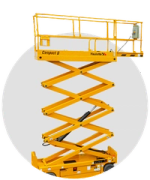
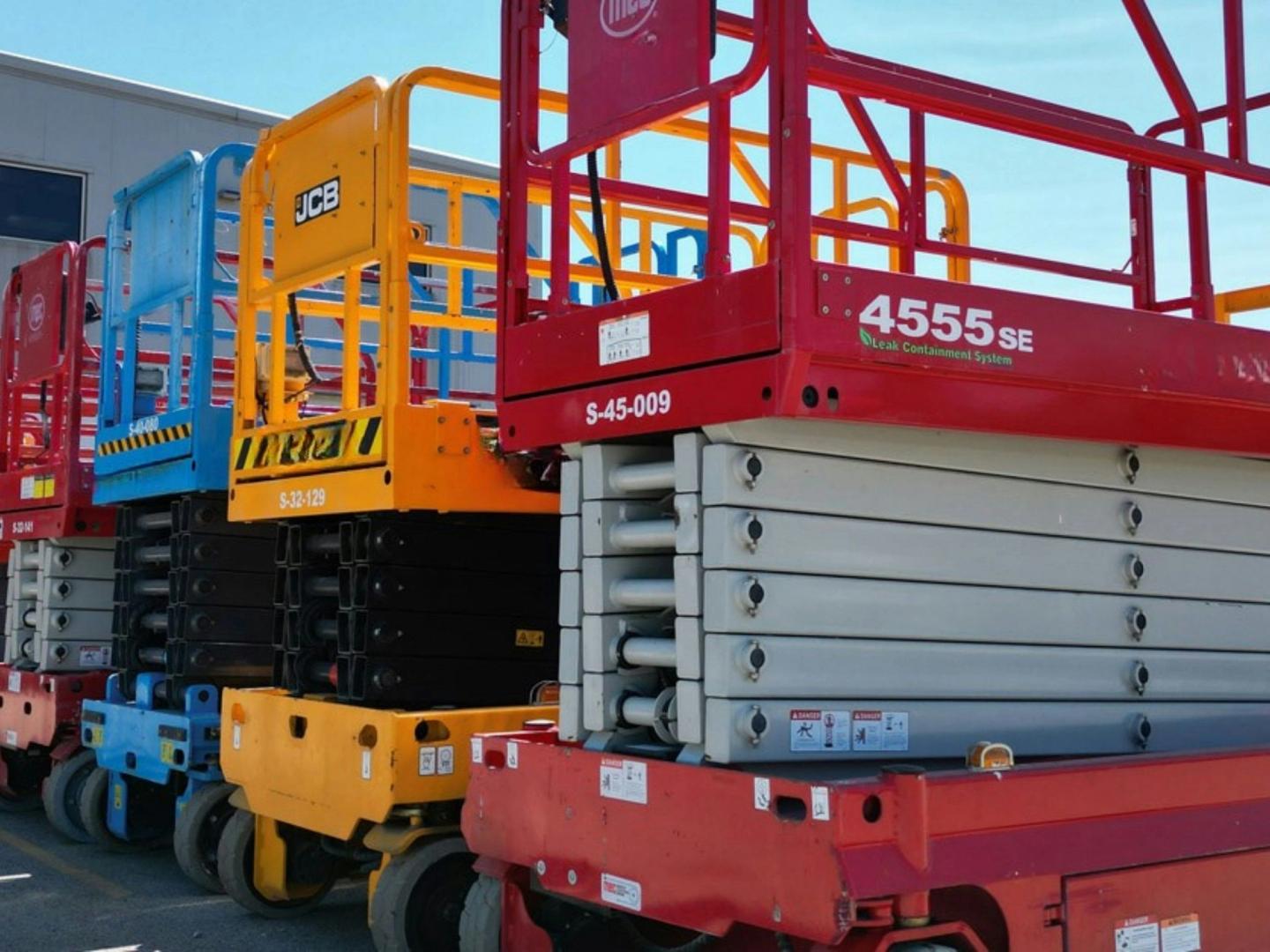
A scissor lift is a Mobile Elevating Work Platform (MEWP) where the platform rises and lowers vertically on a folding scissor-action mechanism. Unlike a cherry picker, it doesn't have an articulated arm - it goes straight up and straight down. The platform is typically larger than a cherry picker basket, giving more room for two operators, tools and materials.
It's self-propelled, so you can drive it to where you need to work, elevate to your working height, and drive it along as the job progresses - without descending every time you need to move. For continuous elevated work along a run of cladding, a wall, a ceiling or a shelf run, this is the significant practical advantage over a static platform or a cherry picker.
Which One Is Right for Your Project?
Electric scissor lift - use it for: Indoor ceiling work and high-bay installation. Interior painting and decorating at height. Electrical, plumbing or HVAC installation in a building. Warehouse stock management and inspection. Any work where fumes would be hazardous or noise is a concern. On smooth, flat outdoor surfaces in calm conditions.
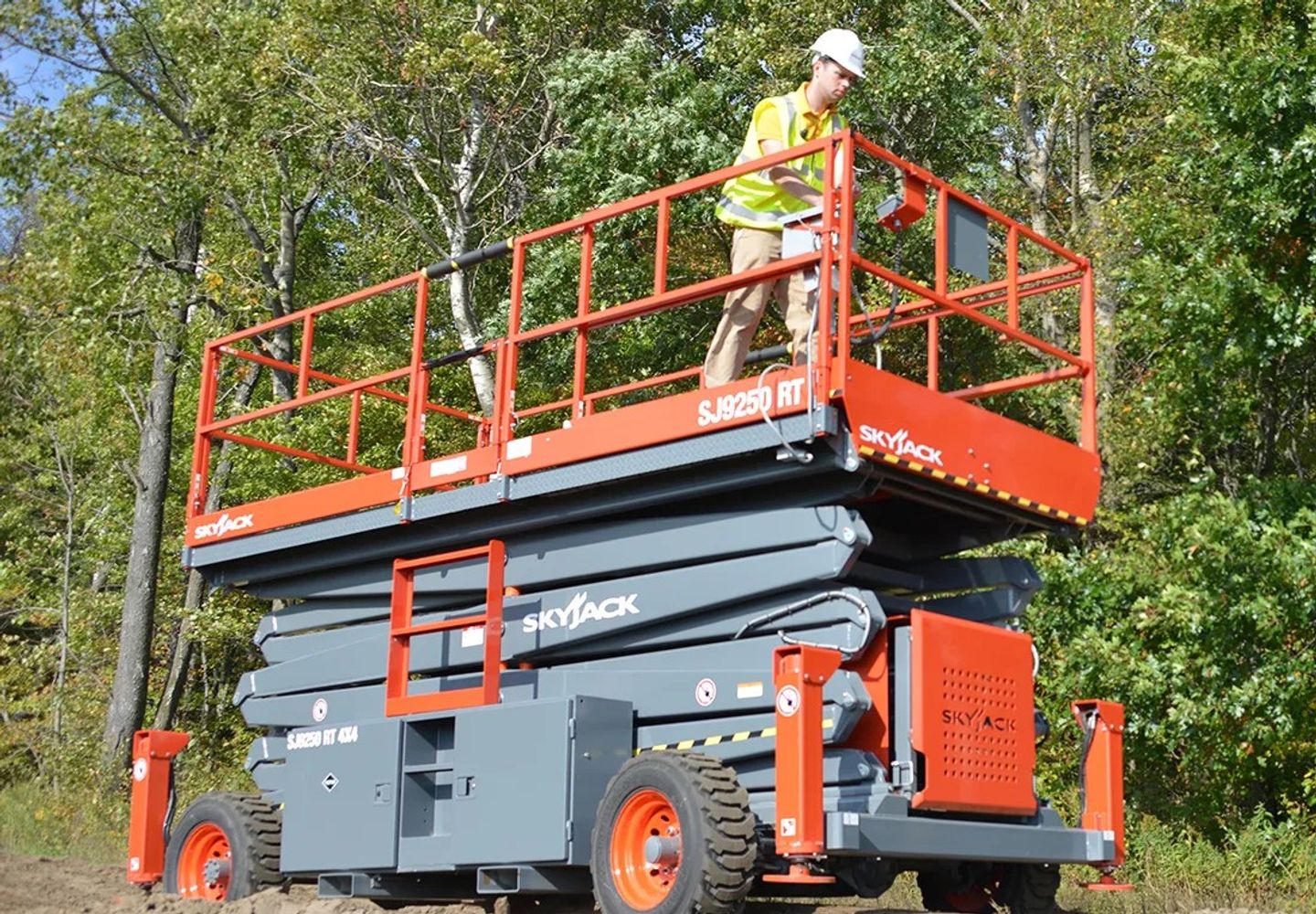
Diesel scissor lift - use it for: Outdoor construction and renovation at height. Exterior cladding, roofing preparation and facade work. Any project on uneven, rough or sloped ground. Site work where the machine needs to travel significant distances across the site. Commercial programmes where continuous high-capacity platform use is required.
The single most important question: Is the ground flat, solid and level where the electric model needs to operate - and is there adequate ventilation for a diesel model if you're working indoors?
If the work is indoor, choose electric. If the ground is uneven or rough outdoor terrain, choose diesel. If you're not sure, the HSS DIY live chat team can advise based on your project location and site conditions.
The Machines - Book at HSS DIY
🟢Electric Scissor Lift | 5m to 22.5m working height | Battery powered | Indoor and smooth outdoor
Best for: Interior decoration, maintenance, installation, warehouse work - any job on flat level ground
Quiet, emission-free, non-marking tyres. Self-propelled with pendant control for driving while elevated. Battery typically provides a full working day. Must be used on flat, solid, level surfaces - check ground conditions before hire. Working heights from 5m to 22.5m depending on model. IPAF 3a required on commercial sites.
🔴Diesel Scissor Lift | 9.75m to 34m working height | 4x4 rough terrain | Outdoor
Best for: Outdoor construction, exterior renovation, cladding, any project on uneven or rough ground
4x4 capability, self-levelling outriggers, extending deck. Working heights from 9.75m up to 34m. For outdoor and rough terrain use. Fuel not supplied — arrange white diesel or HVO before the machine arrives. Not for indoor or enclosed use. IPAF 3a required on commercial sites.
Full scissor lift range: hss.mom/hire/c/powered-access/electric-scissor-lifts | Diesel Scissor Lifts | All Powered Access
IPAF 3a - What You Need to Know
Scissor lifts are category 3a under IPAF.
IPAF category 3a covers scissor lift operation specifically. It's separate from 3b (boom lifts) - if you need to operate both, you can take a combined course covering both categories. On any commercial or construction site in the UK, a valid 3a card is required for all scissor lift operators. Check card validity and expiry before mobilisation.
For domestic private use: not legally required, but strongly recommended. The training covers pre-use inspection, safe driving while elevated, load management, emergency descent and the ground conditions that scissor lifts can and can't handle - all things that matter on a first hire.
IPAF training from HSS Training: hsstraining.com. IPAF card check: ipaf.org
Safety - Before You Elevate
- IPAF 3a certification for scissor lifts: Required on all commercial and construction sites. Covers scissor lift (MEWP category 3a) operation. Domestic private use: not legally required, but strongly recommended before your first use. HSS Training at hsstraining.com runs accredited IPAF courses covering 3a and 3b
- Flat and level surfaces for electric models: Electric scissor lifts must be used on flat, solid, level ground. This is the most commonly violated operating condition for electric scissor lifts on domestic projects - a slightly sloped patio, a soft lawn, or compacted rubble does not constitute a flat solid surface. Check the ground before elevating
- Wind limits outdoors: Electric scissor lifts must not be used outdoors in winds above 28mph. Diesel models have their own wind limits at height - check the product specification. Wind at height is consistently stronger than wind at ground level; what feels fine on the ground may be above operating limits at 10 metres
- Harness attached, always: Clip the harness to the anchor point before elevating. This applies on scissor lifts exactly as it does on boom lifts. The harness is there - use it
- Don't overload the platform: Scissor lift platforms have a safe working load that includes both people and equipment. Adding an extra bag of tools, a paint roller, a drill and a radio to a platform rated for one person and 120kg of tools is a quick way to exceed it. Check the safe working load on the product page
- Indoor ventilation for diesel: Never use a diesel scissor lift in an enclosed or poorly ventilated space. Carbon monoxide from diesel exhaust accumulates rapidly in enclosed buildings. The diesel model is for outdoor or very well-ventilated indoor use only
- Emergency descent: Scissor lifts have an emergency lowering system that operates even without power. Know where it is and how to use it before you go up - not while you're elevated and something has gone wrong
HSE MEWP guidance: hse.gov.uk/work-at-height. Safety equipment to buy at HSS DIY alongside your hire.
Frequently Asked Questions
What is the difference between an electric and diesel scissor lift?
Electric scissor lifts run on battery power - they produce no emissions, are quiet, and are designed for indoor use or smooth outdoor surfaces. Diesel scissor lifts run on diesel engines, produce exhaust fumes, are louder, and are designed for outdoor rough terrain where the electric model can't operate. Electric models reach working heights of 5m to 22.5m; diesel models go up to 34m. Choose electric for indoor work or smooth outdoor surfaces; choose diesel for rough outdoor terrain and construction sites.
Do I need IPAF to hire a scissor lift?
For domestic private use on your own land, IPAF certification is not a legal requirement. For any commercial or construction site, IPAF category 3a certification is required for all scissor lift operators. IPAF 3a covers scissor lift operation specifically - it's a different card from the 3b (boom lifts). If you need both, you can take combined 3a/3b training in a single course at HSS Training.
Can I use an electric scissor lift outdoors?
Yes, with conditions. Electric scissor lifts can be used on smooth, flat outdoor surfaces - a concrete driveway, a hard-surfaced yard, a level patio. They cannot be used on rough, uneven or significantly sloped terrain, and must not be operated outdoors in winds above 28mph. For rough outdoor terrain, the diesel scissor lift is the correct hire. If you're not sure whether your surface qualifies, the HSS DIY live chat team can advise based on your project description.
How high do scissor lifts go?
Electric scissor lifts from HSS DIY have working heights from 5m to 22.5m, depending on the model. Diesel scissor lifts go from 9.75m up to 34m. The working height is measured from the ground to the raised platform surface - add your own height when standing on the platform to get your approximate maximum reach. Most domestic two-storey house maintenance requires a working height of around 8-10m, which the electric scissor lift range covers well.
What surface does a scissor lift need to operate on?
Electric scissor lifts need a flat, solid, level surface - concrete, compacted tarmac or hard-standing yard are ideal. Avoid soft ground, loose gravel, significantly sloped surfaces or wet grass. The lift will not elevate safely if the base unit is on a significant slope. Diesel scissor lifts are rated for rough terrain - 4x4 capability and self-levelling outriggers mean they can operate on uneven, sloped or rough ground within their rated limits. Check the specific model's gradeability on the product page.
Can two people work from a scissor lift platform at the same time?
Depends on the model and how it's being used. Most electric scissor lifts allow two people on the platform for indoor use, provided the combined weight of people, tools and equipment stays within the safe working load. For outdoor use, some models are rated for one person only in certain configurations. Check the specific safe working load on the product page and include all equipment when calculating - tools, materials and PPE all count toward the total.
Useful External Sources
HSE - Working at Height Regulations: hse.gov.uk/work-at-height - Regulatory framework covering MEWP use and employer/operator responsibilities.
IPAF - Card Check and Training: ipaf.org - Verify IPAF 3a card validity and locate accredited training providers.
HSS Training - IPAF 3a Courses: hsstraining.com - Accredited 3a scissor lift training. Required for commercial sites.
HSS DIY YouTube: youtube.com/@HSSDIY - Equipment guides and project content from The Home of Great Projects.
Electric or Diesel - Now Pick the Right One and Book It
Electric for indoor work and smooth outdoor surfaces. Diesel for rough outdoor terrain and construction sites. Those two sentences cover 90% of the scissor lift hire decision. The working height range from HSS DIY covers everything from a domestic two-storey house to a commercial high-bay, so the machine exists for whatever the project needs.
Book online at hss.mom, select next day delivery, and the machine will be on site ready to work before you've finished your morning coffee.
Buy the materials. Hire the tools. One order. All in one place.
Get DIY Happy.
Meet the people behind our Tips & Advice
From quick fixes to bigger DIY projects, get to know the people behind the guides helping you get the job done with confidence.