

⏱ Read time: 7 min 📊 Difficulty: Advanced (Trade) 👷 1 certified operator
At some point in most construction programmes, somebody books the wrong machine. The counterbalance forklift arrives on a site with six inches of topsoil covering the hardstanding and spends the first two days as an expensive sculpture. The telehandler ends up in a tight warehouse where the boom has nowhere to go. Both machines are sitting on their hire rates doing precisely nothing useful.
The forklift vs telehandler decision is one of those choices that looks straightforward - one goes up, one goes forward and up - until you are standing on site with a load that needs to be somewhere and a machine that cannot get it there. This guide is the practical version: what each machine does, where it works, when to hire which, and where they overlap.
At HSS DIY - The Home of Great Projects - you can hire the full range of electric and diesel forklifts, rough terrain forklifts and telehandlers online 24/7 with next day delivery. Trade accounts through HSS ProService. Buy the materials. Hire the tools. One order. All in one place.
The Fundamental Difference - Vertical vs Telescopic Reach
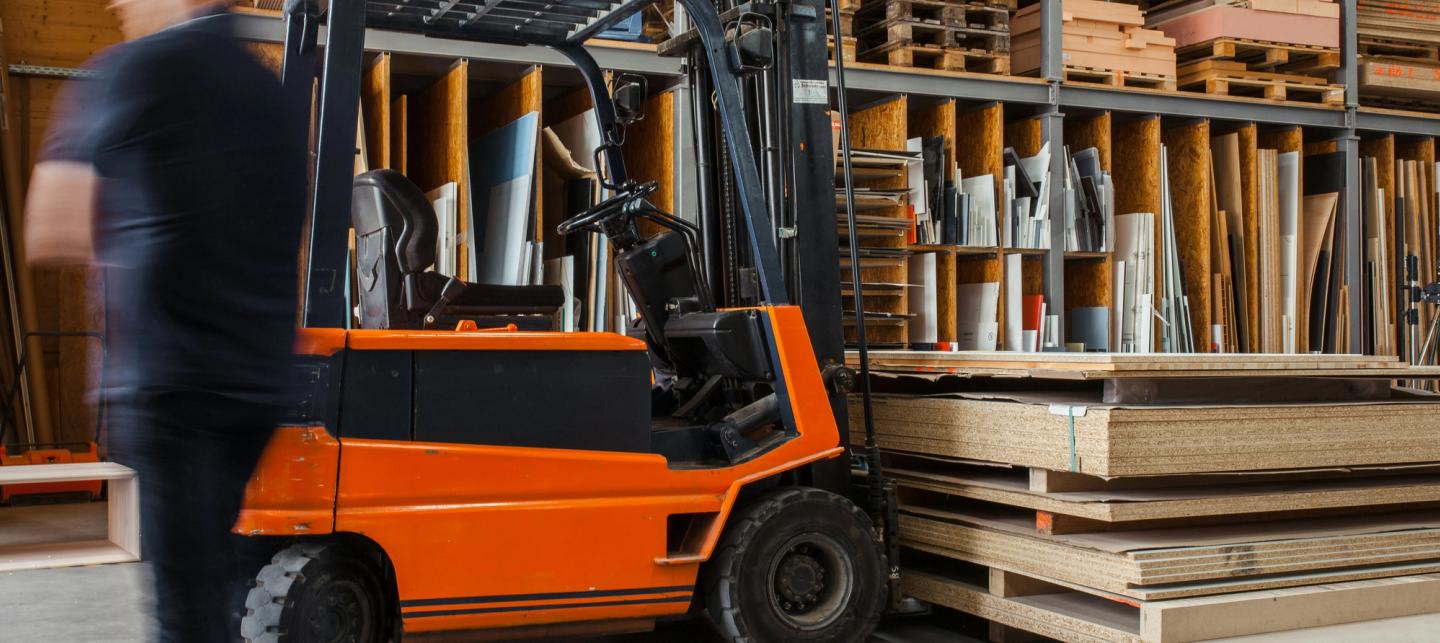
Counterbalance Forklift: The mast goes up. The forks go up with it. The load stays close to the front of the machine. Excellent for warehousing, yard operations, pallet handling on flat hard surfaces, and anywhere with regular, repeated lift movements at consistent heights. Highly manoeuvrable in tight spaces. The wrong machine for anything that needs reach over an obstacle or height beyond the mast limit.
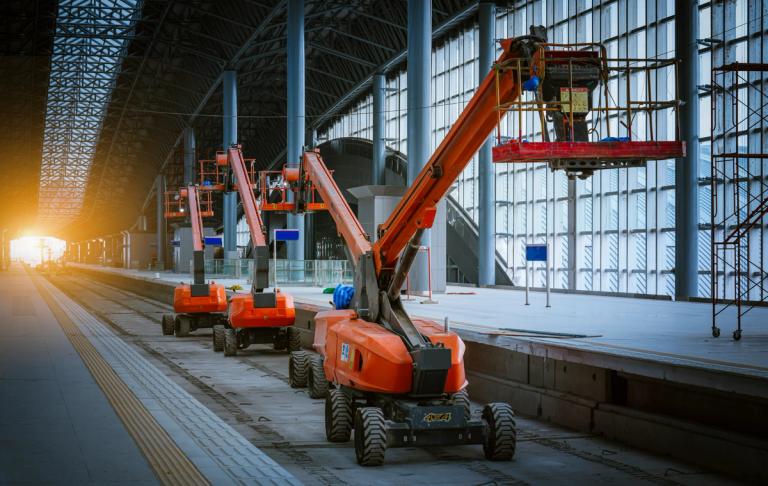
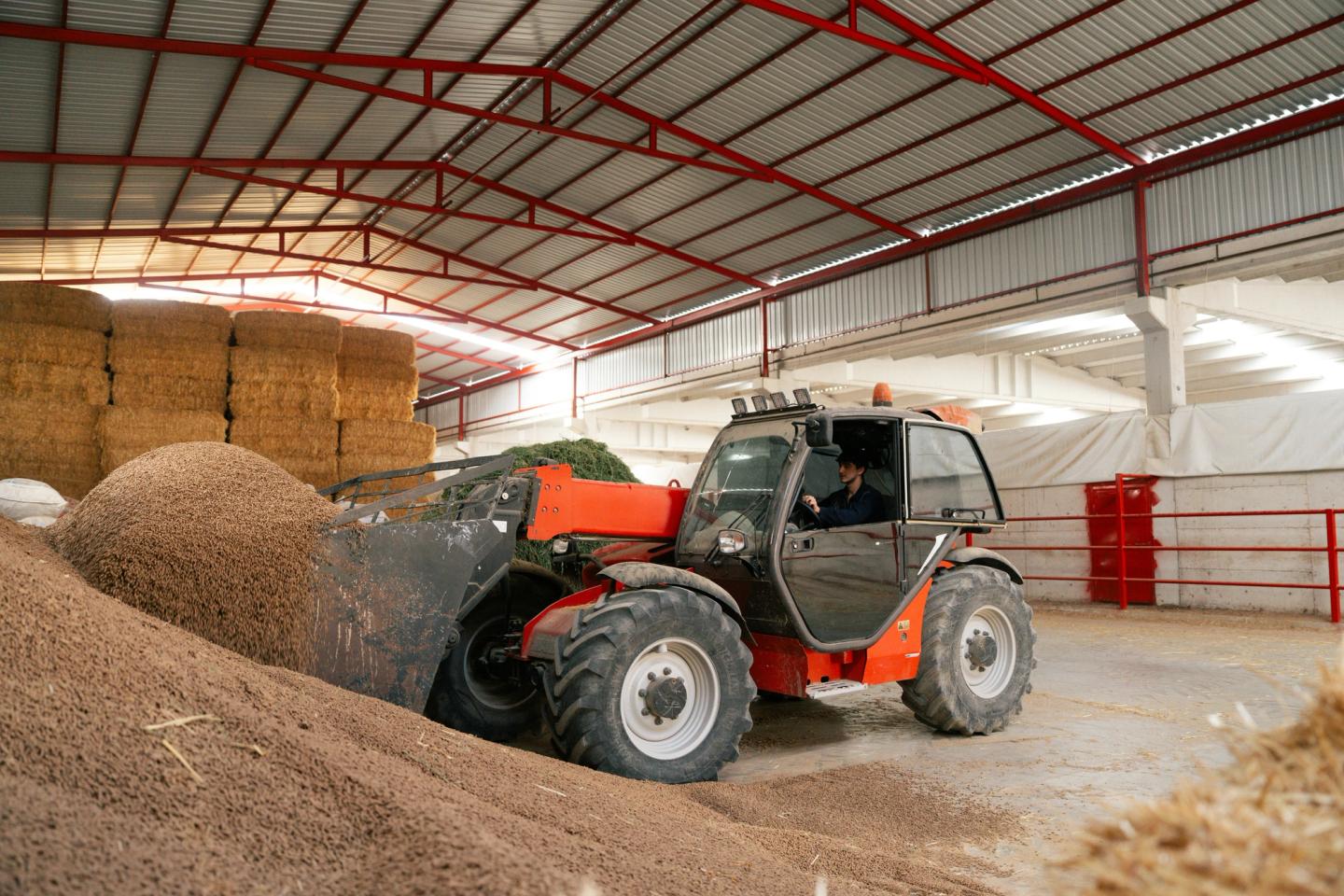
Telehandler: The boom extends forward and upward, telescopically. The load can be placed at height, over structures, into tight spaces on upper floors, or on terrain where the machine needs to be parked away from the delivery point. Runs on all terrain. Accepts multiple attachments. The machine for construction sites, agricultural work and any programme where the load needs to go somewhere a counterbalance cannot reach.
Which Machine for Which Site Condition?
Choose a forklift when:
• The site has a concrete hardstanding, warehouse floor or smooth yard - the counterbalance needs firm, flat ground to operate safely
• The work is primarily pallet handling at consistent heights - picking and placing in racking, loading and unloading vehicles, moving materials around a flat site
• Indoor work or emission-sensitive environments - the electric counterbalance is the right hire for inside buildings or areas where diesel exhaust is a concern
• High repetition, high throughput pallet operations - the counterbalance forklift covers more ground per hour in a warehouse environment than a telehandler
Choose a telehandler when:
• The site is on rough, soft or uneven ground - the telehandler's all-terrain capability means it goes where the counterbalance physically cannot
• Materials need to go to height - roof trusses, structural steel, materials to upper floors. The telehandler's boom reach is what the forklift mast cannot replicate
• Multiple attachment types are needed in the same programme - forks, bucket, hook, work platform. One telehandler replaces several single-purpose machines
• The load point is some distance from where the machine can stand - the telescopic reach allows the machine to be parked away from the structure being loaded
The Certifications You Need Before the Machine Goes to Work
Certification - CPCS and ITSSAR for Forklift and Telehandler Operators
All commercial operators of counterbalance forklifts and telehandlers require a recognised operator certification. The two main schemes in the UK are CPCS (Construction Plant Competence Scheme) and ITSSAR (Independent Training Standards Scheme and Register). Both are employer-recognised and widely accepted across construction and logistics sites.
• CPCS A14 - Forklift: covers counterbalance forklift operation up to and including rough terrain models. Required on construction sites for any forklift operator
• CPCS A14a - Telehandler (slewing): for slewing telehandlers. CPCS A40 covers fixed rotation telehandlers. The specific card required depends on the machine type
• ITSSAR equivalent: ITSSAR Registration Cards are widely accepted and cover the same machine categories as CPCS. Check site requirements before mobilising - some principal contractors specify CPCS only
• LOLER inspections: all lifting equipment, including forklifts and telehandlers, must be subject to thorough examination under LOLER (Lifting Operations and Lifting Equipment Regulations 1998) every 6 months. The hired machine from HSS DIY will have current LOLER certification - confirm this before use and keep records
• HSS Training: CPCS and ITSSAR forklift and telehandler training courses available at hsstraining.com
Verify certification requirements: cpcs.uk.com and itssar.org.uk
The Full Lift and Shift Range at HSS DIY
⚡Electric Counterbalance Forklift (1.5t and 3.0t) | Electric | 1.5t or 3.0t | Indoor | No emissions | Quiet
Best for: Warehouses, fit-outs, indoor materials handling, ULEZ/emission-sensitive sites
Quiet, emission-free operation for indoor warehouses, fit-out sites and any environment where diesel exhaust is not acceptable. Electric drive provides smooth, controllable movement on polished and sealed concrete. 4-wheel counterbalance design. The 1.5t model suits narrow aisle and tight-space warehouse operations; the 3.0t for heavier pallet loads. Requires level, smooth hard surfaces. Charging arrangements to confirm at booking.
⛽Diesel Counterbalance Forklift (2.5t) | Diesel | 2.5t | Yard and ventilated environments
Best for: External yard operations, warehouse loading bays, open-sided buildings, plant areas
The standard yard workhorse. 2.5t capacity for regular commercial pallet and materials handling in open or well-ventilated environments. More power for sustained high-throughput yard operations than an electric model in challenging conditions. Requires adequate ventilation - not suitable for enclosed indoor use. Fuel not supplied.
Hire Diesel Counterbalance Forklift
🏗️ Rough Terrain Forklift (2.6t JCB) | Diesel | 2.6t | 4.63m lift | 4WD | All terrain
Best for: Construction sites, rough ground, outdoor materials distribution - the site forklift
4WD rough terrain capability with fully encapsulated drive components for outdoor site conditions. 2.6t lift capacity to 4.63m. JCB build - robust and reliable across construction site cycles. The diesel-electric drive system combines engine power with electric precision control. The right forklift for sites where the counterbalance would sink, slip or simply not reach the working area.
🦺 Telehandler (4t | Up to 17m) | Diesel | 4-tonne | Up to 17m | All terrain | Multi-attachment
Best for: Construction programmes - frame and roof lifting, materials to height, all-terrain site logistics
4-tonne lift capacity with telescopic boom to 17m working height. 4-in-1 joystick, anti-tilt cab mounted load controller and smooth inching system. Accepts fork, bucket, hook and work platform attachments. The most versatile single hire on a construction site - one machine replaces several single-purpose pieces of plant across a full programme. CPCS certification required.
Full lift and shift range: hss.mom/hire/c/lifting-handling/forklifts-attachments | Telehandlers
Case Study: New-Build Development - Three Machines, Three Programme Phases
Case Study: New-Build Housing Development - Telehandler and Forklift on the Same Programme
The programme: A 24-unit new-build residential development. Frame and roof package, groundworks and materials distribution across a 12-week construction programme. Mixed site - concrete hardstanding to the entrance and first two plots, soft ground across the remainder.
Phase 1 - Frame and roof: Telehandler (17m 4t) for lifting structural timber and roof trusses to height. The reach and height capability of the telehandler made it the only practical machine for this phase. A counterbalance forklift cannot safely position loads at roof height on a variable terrain site.
Phase 2 - Materials distribution: Rough terrain forklift (2.6t) for moving palletised materials - blocks, insulation, board - around the site across soft ground. More manoeuvrable than the telehandler in tight plot spaces. Higher throughput on repetitive pallet moves.
Phase 3 - Fit-out: Electric counterbalance forklift (1.5t) for internal distribution once the buildings were watertight and internal access was needed without diesel emissions.
Result: Three different machines, three different programme phases, all booked through HSS DIY all in one place. No machine sitting idle between phases because the hire was scheduled against programme milestones rather than booked as a block.
Useful External Sources
- HSE - Safe Use of Lifting Equipment (LOLER): hse.gov.uk/work-equipment-machinery/loler.htm - Regulatory framework for lifting equipment inspection and safe use, including forklifts and telehandlers.
- CPCS - Plant Operator Card Scheme: cpcs.uk.com — Check CPCS card validity, find assessment centres and confirm category coverage for forklifts and telehandlers.
- HSS Training - CPCS and ITSSAR Courses: hsstraining.com - Accredited forklift and telehandler operator training from HSS Training.
Frequently Asked Questions
How much does it cost to hire a forklift in the UK?
Forklift hire rates from HSS DIY vary by model, location and hire period. Electric counterbalance forklift hire starts from approximately £100-£150 per week for a 1.5t indoor model. Diesel counterbalance models start from around £120-£180 per week. Rough terrain forklifts are typically £150-£250 per week depending on capacity. Telehandler hire starts from around £200-£350 per week for a 10m 3t model. All rates are estimates - verify current live pricing at hss.mom before budgeting. Weekly rates are significantly more cost-effective than daily rates for programme-length hire.
What is the difference between a counterbalance forklift and a telehandler?
A counterbalance forklift lifts vertically - the forks go up and down on a mast in front of the machine. It is excellent in warehouses, yards and flat site logistics. A telehandler has a telescopic boom that extends upward and forward, allowing it to reach at height and over obstacles. This makes telehandlers far more versatile on construction sites where loads need to be placed at roof height, over structures or on uneven terrain. A telehandler can also run multiple attachments - forks, bucket, lifting hook, work platform - that a standard forklift cannot accommodate.
Do I need a licence or certification to hire a forklift or telehandler?
For commercial and construction site use, yes - CPCS (category A14 for counterbalance forklifts, A40 or A14a for telehandlers) or the ITSSAR equivalent is required. This is an employer legal requirement under LOLER and the Provision and Use of Work Equipment Regulations. The machine itself requires a thorough examination every 6 months under LOLER. For domestic private use on your own land, there is no legal certification requirement, though training is strongly recommended.
What is the best forklift for use on a construction site with rough terrain?
For rough outdoor terrain - soft ground, slopes, uneven surfaces typical of a construction site - the rough terrain forklift or a telehandler are the correct choices. The counterbalance electric and diesel models are designed for smooth hard-surfaced environments. The rough terrain forklift (2.6t, 4.63m lift height from HSS DIY) has 4WD and fully encapsulated drive components for site conditions. For sites where you also need reach or height beyond 4.63m, the telehandler is the more versatile single hire.
Can I use an electric forklift outdoors?
Electric forklifts can be used outdoors on smooth, hard-surfaced areas - a concreted yard, a warehouse loading bay, a hardstanding area. They are not suitable for rough, soft or significantly sloped outdoor terrain. The main advantage of the electric model for outdoor use is zero emissions - no diesel exhaust in or around buildings. The electric telehandler (6m 2.5t) provides all-terrain electric capability for sites where emissions are a concern. For genuinely rough outdoor terrain, the diesel rough terrain forklift is the correct hire.
What attachments are available for hired telehandlers?
Telehandlers are highly versatile because of their attachment options. Standard configurations come with pallet forks. Additional attachments available include: buckets for bulk materials (soil, aggregate, sand), lifting hooks for crane-style load positioning, work platforms for people at height (requires IPAF considerations - the platform is a MEWP when persons are lifted), bale clamps for agricultural use, and winch attachments for specialist lifting.
Right Machine, Right Phase, Right Result.
The forklift vs telehandler decision is not complicated once the site conditions, load requirements and lift height are understood. A counterbalance forklift on flat, hard ground for repetitive pallet operations. A rough terrain forklift or telehandler on a construction site with variable ground. An electric model when emissions matter. The machine choice follows directly from the job.
Book through HSS DIY online 24/7. Get the machine on site the day the programme needs it, not the day after.
Buy the materials. Hire the tools. One order. All in one place.
Get DIY Happy.
Meet the people behind our Tips & Advice
From quick fixes to bigger DIY projects, get to know the people behind the guides helping you get the job done with confidence.