






⏱ Read time: 7 min 📊 Difficulty: Intermediate 🔧 Time: 1-3 days 👷 Manpower: 1-2 people
At some point, standing in the garden with a spade, looking at the amount of clay you need to move, the question stops being 'can I do this by hand' and becomes 'which machine do I hire and how complicated is it to sort out'.
The good news: hiring a mini digger, mini dumper or larger excavator is straightforward. The range of machines available from HSS DIY covers everything from a micro excavator that fits through a 750mm garden gate to a 5t excavator for serious commercial groundwork. And the licence question - the one that stops a lot of first-timers from booking - has a much simpler answer than most people expect.
At HSS DIY - The Home of Great Projects - you can hire the full excavator range online 24/7, with next day delivery. Buy your materials in the same order. 'Buy the materials. Hire the tools. One order. All in one place.' Here's everything you need to know before you book.
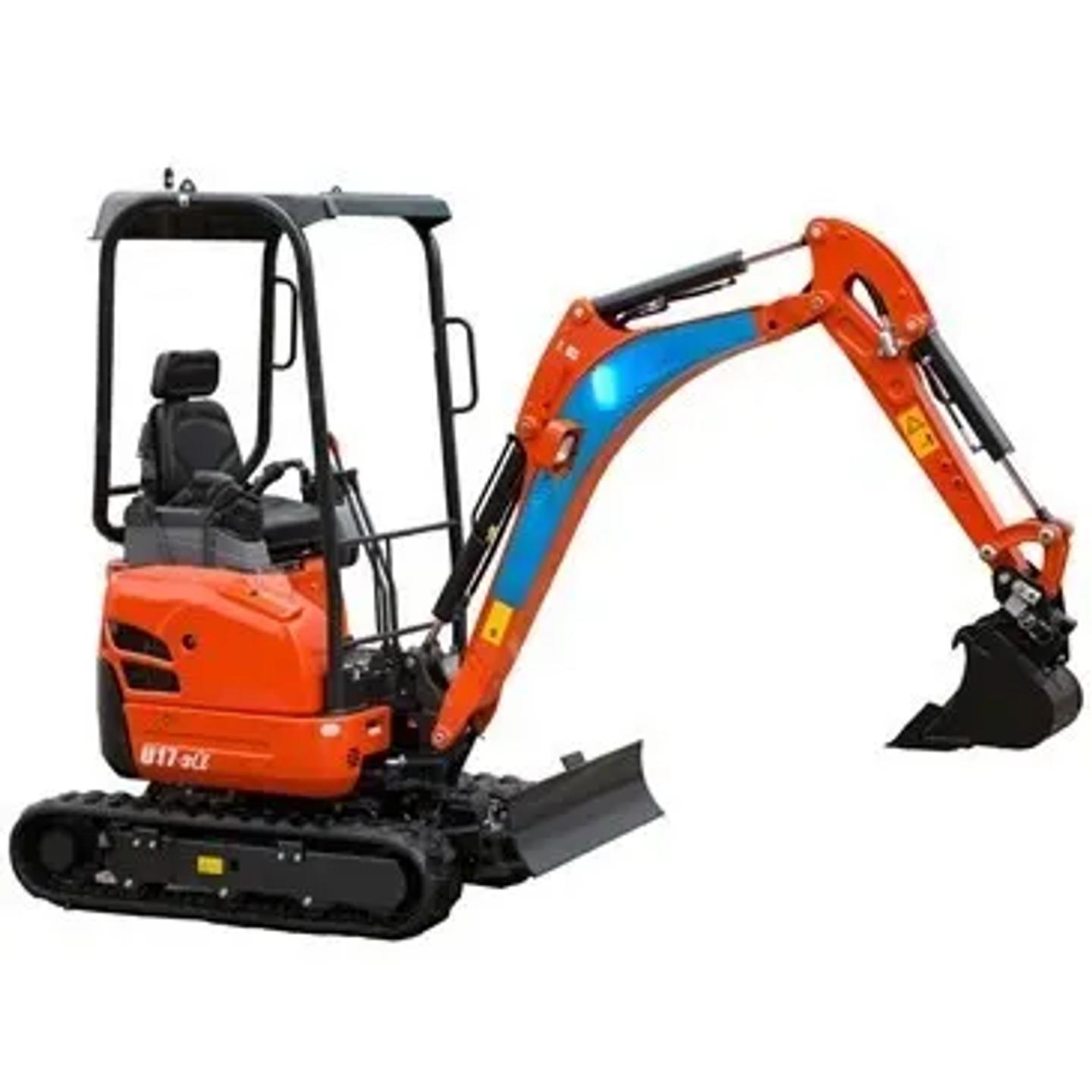
Do I need a licence to hire a mini digger?
SHORT ANSWER: No - not for private domestic use on your own land.
LONGER ANSWER: If you're digging up your garden, installing drainage on your property, building a pond or clearing land on your own private plot, you don't need a formal licence or certification to operate a mini digger in the UK. Anyone can hire one. That said, getting in the cab for the first time without any guidance is a reliable way to make a mess - of your garden, your plumbing, or your weekend plans.
ON COMMERCIAL SITES: A different story entirely. If you're operating a mini digger, 3t excavator or 5t excavator on any commercial or construction site in the UK, operators must hold a valid CPCS (Construction Plant Competence Scheme) or NPORS card for the relevant machine category. No card, no plant operation - a site manager is well within their rights to stop anyone operating without it, and many will.
TRAINING IS ALWAYS WORTH IT: Whether you're a first-timer in your own garden or an experienced groundworker adding a new machine category, HSS Training at hsstraining.com runs excavator and plant operator courses that are genuinely useful and, for the commercial site work, genuinely required.
Which Machine Do You Actually Need?
Getting the machine size right before you book saves you the choice between a machine that won't fit through your gate, or one that's too underpowered for the job. Here's the honest breakdown.
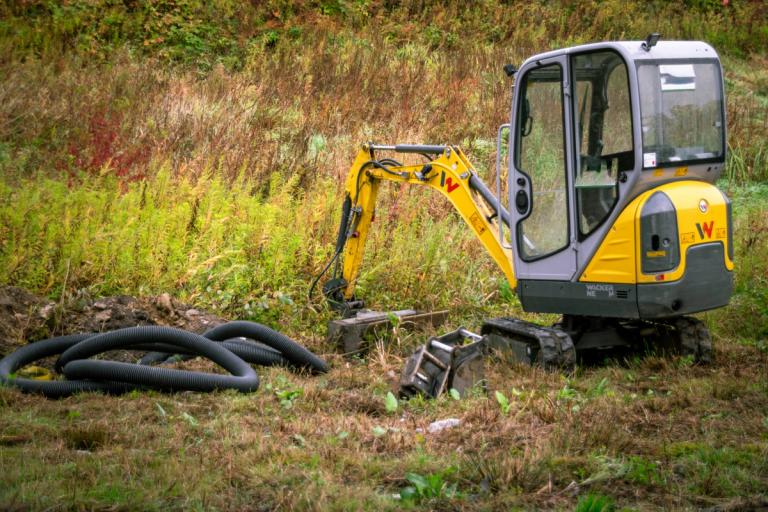
Micro Excavator 0.75t: Gate width under 900mm. Garden access only. Light domestic work - ponds, planting, drains in soft soil. Quieter and lighter than the 1.5t. Licence: not required for domestic use.
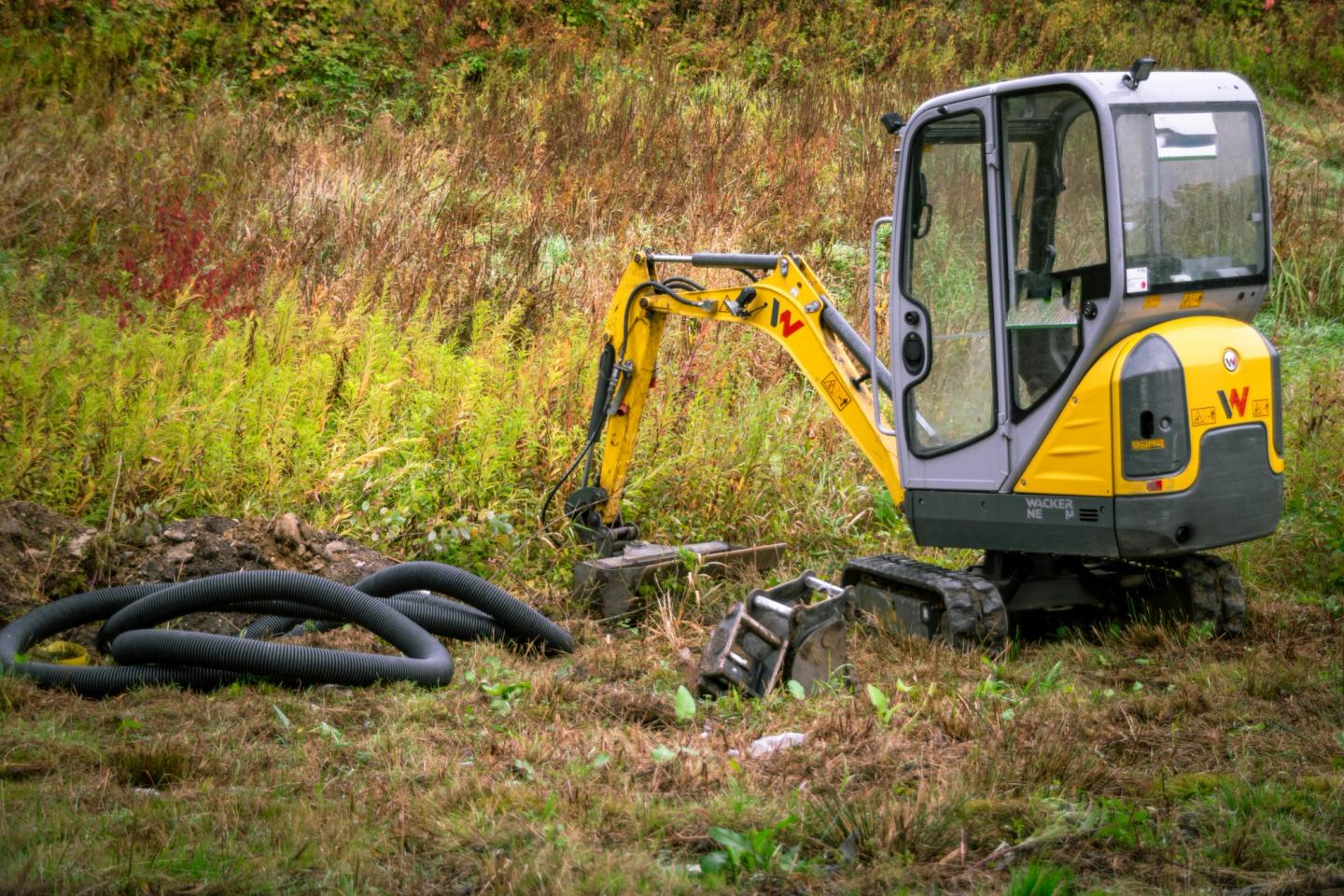
Mini Digger 1.5t: Standard garden gate access (900mm+). Most domestic and light commercial jobs. Dig depth approximately 2.5m. Dozer blade. 19L tank runs all day. Licence: not required for domestic use; CPCS/NPORS required on commercial sites.
3t Excavator (Midi): Full site access needed. Dig depth 2.74m, reach 4.4m. ROPS (roll over protective structure) or FOPS (Falling objects protective structure) cab. For groundwork programmes, larger garden landscaping and commercial jobs. 45L tank, approximately 10 hours continuous operation. Licence: CPCS/NPORS required on all commercial sites.
5t Excavator (Midi/Heavy): Commercial groundwork, deeper foundations, demolition and civils. Greater digging force and reach than the 3t. For experienced operators on planned programmes - not a first-timer's machine. Licence: CPCS/NPORS required.
Project at a Glance
Phase 1- Preparation (half day before machine arrives): Mark out the excavation area. Check for buried services. Clear vehicle access and gate path. Position skip or confirm spoil disposal plan. Check access width against machine width before the delivery lorry gets there.
Phase 2- Machine on site (Day 1, morning): Walk-round inspection. Check fuel level - fuel is not supplied with hire plant. Confirm controls and bucket position. Establish exclusion zone. Position dumper or wheelbarrow for spoil.
Phase 3- Excavation (Day 1 to Day 2, volume dependent): Work systematically. Don't dig yourself into a corner. Check formation depth regularly. Move spoil regularly - a buried dumper adds time. Take breaks and walk around the excavation to check side stability.
Phase 4- Backfill, level and clear (final half day): Backfill in compacted layers if required. Level formation. Clean bucket and tracks before machine collection. Return on the agreed hire end date
The Full Range - Book Your Machine at HSS DIY
Every machine below is available to hire from HSS DIY with next day delivery to your site or home address. Links go directly to the hire pages.
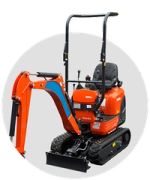
🔵 Micro Excavator0.75t | 0.75 tonnes | approx. 750mm wide
Best for: Tight gate access under 900mm, light garden excavation in soft to medium soil
Compact enough to fit through a standard garden gate, this is the machine for projects where access is the limiting factor. Ideal for garden ponds, drainage runs, planting area clearance and smaller tree stump removal. In softer soil conditions it's a genuinely capable machine; in heavy clay it takes more time but still gets the job done. No licence required for domestic use.
🟡 Mini Digger1.5t | 1.5 tonnes | Dig depth approx. 2.5m
Best for: Standard garden projects, domestic groundwork, light commercial work with open access
The most widely hired digger in the HSS DIY range. Covers the majority of domestic garden and groundwork projects where there's a standard gate or open access. 19L tank runs all day. Dozer blade for light grading. The machine to default to if the 0.75t is too small and a 3t is overkill. No licence required for domestic use; CPCS/NPORS required on commercial sites.
🔴 3t Excavator (Midi) | 3 tonnes | Dig depth 2.74m | Reach 4.4m
Best for: Volume groundwork, larger landscaping, foundation trenches, commercial groundwork
Full ROPS/FOPS cab. 45L tank for approximately 10 continuous hours. The step up from the 1.5t mini digger when you need more reach, more digging force or higher throughput. Suited to larger domestic projects with open access, and commercial groundwork programmes where time and volume matter. CPCS/NPORS required on commercial sites.
🟤 5t Excavator (Midi/Heavy) | 5 tonnes | Greater dig force and reach than 3t
Best for: Commercial groundwork, deeper foundations, demolition, volume civil engineering
When a 3t excavator isn't enough - deeper foundations, harder ground, volume spoil removal or demolition work where the extra machine weight and digging force make a material difference to the programme. For experienced operators on planned programmes. CPCS/NPORS required. Discuss requirements with the HSS DIY team if you're unsure which midi is right for your job.
Don't Forget the Mini Dumper - It's Not Optional
A mini digger without a spoil-moving solution is a machine that's only doing half the job. Every bucket of soil the excavator moves still needs to go somewhere - and if you're shifting it by wheelbarrow, you're doing it slowly and tiring yourself out in the process.
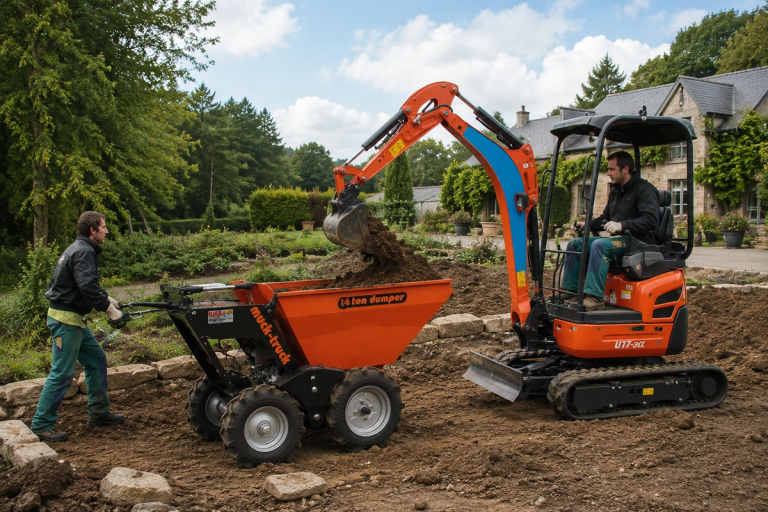
🚛 Mini Dumper 0.25t (4WD) | 0.25 tonnes | Narrow enough for doorways and passages
Best for: Domestic garden projects - moves spoil from excavation to skip, pile or front garden
Carries three times more than a wheelbarrow per load and tips itself. 4WD for rough or sloped ground. Narrow enough to fit through an average doorway, so it can work alongside the micro or mini excavator through the same gate. If you're hiring a digger for more than half a day, this is worth adding to the booking. You'll thank yourself by lunchtime.
🚜 High-Tip Dumper 1t | 1 tonne | Tips to skip height
Best for: Any excavation project disposing of soil via skip - removes manual handling entirely
Tips material directly into a standard skip without lifting or shovelling. If you've got a skip on the driveway and a significant amount of excavated material to move, the 1t high-tip dumper is the pair for your 1.5t mini digger or 3t excavator. CPCS/NPORS required for commercial site use.
Full excavator and digger range: hss.mom/hire/c/building-siteworks/diggers-excavators
Hire or Buy? The Numbers Are Pretty Clear
Mini diggers and excavators are the category of plant where the hire vs buy calculation almost always resolves to hire. The capital cost of buying outright is significant, the maintenance overhead is real, and the storage requirement rules out ownership for most domestic users. Even for groundwork contractors, hiring rather than owning plant that isn't in continuous full-week use is usually the more rational choice.
The exception: if you're running excavators on live sites for 30 or more weeks of the year with your own operators, ownership starts to make financial sense
Watch Before You Operate
Particularly if this is your first time in a digger cab. The controls are intuitive once you know what does what - but 'intuitive once you know' is doing a lot of work in that sentence.
HSS DIY YouTube — youtube.com/@HSSDIY - The Home of Great Projects. Check the channel for how to videos
Case Study: Garden Pond, Drainage Run and Tree Stump Clearance - First-Time Mini Digger Hire
The project: Rear garden renovation - 5m x 4m wildlife pond, new French drain across the garden, and two established tree stumps cleared. Clay-heavy soil. Side gate access only: 860mm width.
Machine chosen: Micro excavator 0.75t - the only machine in the HSS DIY range narrow enough to fit the gate at 750mm. First-time hire. No prior operating experience.
Preparation: Buried services checked the week before. Marked out pond and drain line with spray paint. Skip booked and positioned on the driveway Friday evening. Machine arrived Saturday morning.
Day 1- Pond excavation: Pond dug to 900mm depth by 2pm. Clay soil harder than anticipated - took longer than sandy soil would. Tree stumps removed by end of day.
Day 2- Drainage run: French drain trench dug 600mm deep across 14 metres. Pipe laid and backfilled. Machine returned Sunday afternoon. Two bags of gravel purchased from HSS DIY in the same booking.
Total plant hire cost: Approximately £420 over two days. A contractor quote for the same scope came in at £2,600 including plant, labour and materials.
Safety - Read This Before the Machine Arrives
A mini digger or larger excavator is not inherently dangerous kit if you approach it sensibly. But 'sensibly' has some specific requirements that are worth knowing before you start, not after something goes wrong.
- Check for buried services before any digging: gas mains, electric cables, water pipes and telecom ducting are buried in gardens across the UK. This is the most important line on this list and the one most commonly skipped
- Exclusion zone around operating plant: nobody on foot inside the machine's swing radius while the machine is moving. No exceptions. This includes your partner who wants to point out where you've gone wrong, the dog, and the neighbour's kids. Establish a clear banksman or barrier zone
- PPE is mandatory: hard hat (EN 397), steel toe-cap boots (BS EN ISO 20345 S3), hi-vis vest (EN ISO 20471 Class 2+), ear defenders where noise levels require, heavy gloves. All of this is available to buy at HSS DIY alongside your hire
- Don't enter deep excavations unsupported: any excavation over approximately 1.2m that someone needs to enter requires support shoring or battered-back sides. Soil collapse happens fast. If in doubt, don't go in
- CPCS/NPORS on commercial sites: legally required for mini digger, 3t excavator and 5t excavator operation on any UK construction or commercial site. Check operator card expiry dates before mobilisation. An expired card on a commercial site can stop the job
- Soft or wet ground: loaded plant on waterlogged or soft ground can tip unexpectedly. May ground conditions in the UK vary significantly - check formation before bringing a 3t excavator onto soft clay. Ground protection mats available to hire at HSS DIY
- Fuel and CO risk: diesel plant must never be operated in enclosed or poorly ventilated spaces. Carbon monoxide is odourless and accumulates quickly in enclosed areas - it is not a theoretical risk
Full safety information on every product page at hss.mom. PPE - hard hats, gloves, hi-vis, ear defenders - available to buy at HSS DIY alongside your hire.
Complete Pre-Dig and On-Site Checklist
Before you book:
- Access width confirmed: measure the narrowest point of your gate or access route. 0.75t micro = 750mm wide, 1.5t mini = wider. Measure twice, order once
- Buried services checked Do this before any digging, no exceptions
- Machine size matched to job: micro for tight access and light work, 1.5t for standard garden projects, 3t for volume work and commercial, 5t for heavy groundwork programmes
- Licence requirement checked: domestic private use - no licence required. Commercial/construction site - CPCS or NPORS required for the machine category. Check cards are current
- Attachments needed: narrow bucket for trenching, breaker for concrete or rock, grading blade included on most models
- Fuel arranged: fuel is NOT supplied with hire plant. Diesel or petrol needed before machine starts. Confirm fuel type on the product page
- Spoil disposal plan: skip, mini dumper or removal vehicle confirmed before you start digging - not on the day
On site:
- PPE on before anything else: hard hat, steel toe-cap boots (S3), hi-vis vest, ear defenders, gloves. Non-negotiable
- Walk-round inspection done: check bucket attachment, controls, cab condition. Note anything before operating
- Exclusion zone established: nobody inside the machine's swing radius while operating. Even the neighbour who 'just wants to watch'
- Excavation marked out: pegs, string or spray paint. Know exactly where you're digging before the first bucket goes in
- Depth checks regular: measure dig depth against your target formation level as you go - it's easy to go too deep in the moment
End of hire:
- Machine cleaned: bucket and tracks rinsed down before collection. Avoid additional cleaning charges
- Fuel topped up: if the hire contract requires it, return with a full tank. Check the terms when you collect
Useful External Sources
HSE - Safe Excavation Guidance: hse.gov.uk/construction/safetytopics/excavations.htm — Official regulatory guidance on safe excavation, trench support and buried service risks.
HSS DIY Blog - What Is a Mini Digger?: HSS DIY Mini Digger Guide - HSS DIY's own practical guide to mini digger types, uses and benefits.
HSS DIY YouTube: youtube.com/@HSSDIY - How-to guides and project content from The Home of Great Projects.
Frequently Asked Questions
Do I need a licence to hire a mini digger in the UK?
Not for private domestic use on your own land. You can hire a mini digger, micro excavator or larger machine and operate it on your own property without any formal licence or certification. For commercial or construction sites, operators must hold a CPCS (Construction Plant Competence Scheme) or NPORS card for the relevant machine. If you're unsure and want to be properly prepared, HSS Training at hsstraining.com runs excavator courses that are worth doing regardless of whether they're legally required in your specific case.
What is the difference between a mini digger and a mini dumper?
A mini digger (excavator) is the machine that digs - it has an arm, a bucket, and it moves earth. A mini dumper is the machine that moves the earth away once it's been dug - it carries spoil from the excavation to a skip or pile. They're complementary, not interchangeable. If you hire a mini digger and don't pair it with a dumper of some kind, you'll spend half your day making wheelbarrow runs. A 0.25t mini dumper carries three times a wheelbarrow load per trip and tips itself.
What is the difference between a 3t excavator and a 5t excavator?
Both are midi/heavy excavators significantly more capable than a 1.5t mini digger. The 3t excavator offers a maximum dig depth of 2.74m and reach of 4.4m, with a ROPS/FOPS cab and a 45L tank for approximately 10 hours of continuous work. The 5t excavator delivers greater digging force and reach - suited to deeper foundations, volume excavation, demolition and heavier civils work. Both require CPCS or NPORS certification on commercial sites. For a large domestic landscaping project with open site access, the 3t is usually sufficient. For commercial groundwork programmes, discuss requirements with the HSS DIY team.
How much does it cost to hire a mini digger for a day?
Mini digger hire prices start from approximately £200 for a 1.5t model, though prices vary by location, hire period and machine availability. Micro excavator 0.75t hire starts from around £200 too. Midi excavators (3t and 5t) start from approximately £250–£350 Weekly rates offer meaningful reductions on the daily rate for longer programmes. The best way to get an accurate price is to check live availability and pricing at hss.mom - pricing is location-specific and availability varies in peak season.
Why does May affect mini digger hire availability?
May is the peak of the UK groundwork and landscaping season. Ground conditions are good, days are long, and both DIY homeowners and construction contractors all mobilise simultaneously after months of winter-deferred work. The result is that excavator hire availability - particularly for weekend dates - tightens significantly compared to Q1. If you're planning a May project, book your machine at least one to two weeks ahead for a standard mini digger, and two to three weeks out for 3t and 5t excavators. Don't rely on next day delivery as a fallback when every contractor in your area wants the same thing on the same weekend.
Can I hire a mini digger for just half a day?
Most mini digger hire is charged on a daily rate, so a half-day hire is typically charged at the full day rate. That said, half a day of machine time is often enough for a well-prepared small domestic project - a garden pond, a short drainage run, two or three post holes for a large structure. The key is having everything ready before the machine arrives so you make the most of the time you're paying for. Mark out your excavation, check services, position your skip, and have your PPE on before the delivery arrives.
Right, You Know Which Machine You Need. Now Go Book It.
The licence question has a straightforward answer, the machine range covers every project from a tight garden gate to a commercial groundwork programme, and the hire-vs-buy calculation doesn't need a spreadsheet to work out. What it does need is a booking - and given it's May, peak season, that booking is worth making today rather than next week.
HSS DIY has the full range of mini diggers, micro excavators, 3t and 5t excavators, mini dumpers and high-tip dumpers, all available online 24/7 with next day delivery to your site or home address. Buy your materials in the same order. One booking, all in one place, get digging.
Prices shown are indicative hire and buy rates as of May 2026 and subject to change. Always check hss.mom for current pricing. HSS ProService Ltd.
Meet the people behind our Tips & Advice
From quick fixes to bigger DIY projects, get to know the people behind the guides helping you get the job done with confidence.